

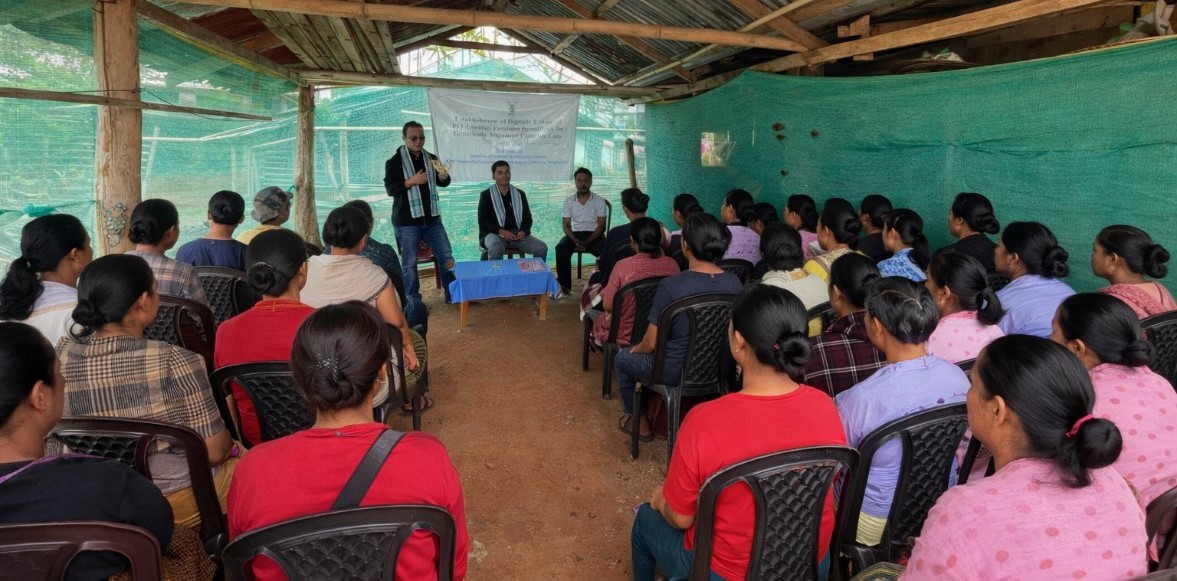
A three-day training cum input distribution programme on the “Establishment of digitally enhanced PIT-enabled
precision brood bank for genetically improved common carp” was successfully conducted at Sarikushi, Ri Bhoi District, Meghalaya from 18th to 20th March 2026, under
Tribal Sub Plan (TSP) programme by Division of Animal and Fisheries Sciences, ICAR Research Complex for NEH Region. The programme was organized by Mr. Angom Lenin,
Mr. Sadokpam Gojendro Singh and Dr. Chandan Debnath under the guidance of Dr. Sandeep Ghatak, Director, ICAR-RC for NEH Region. The training was assisted by Mr. Prasanta M.,
Mr. Shaniah S. Sumer and Mr. Pynhun J.R.
The primary objective of the training was to create awareness among farmers and stakeholders about the importance
of genetically improved fish strains and to promote scientific aquaculture practices. Emphasis was placed on integrating digital tools such as PIT (Passive Integrated Transponder)
tagging for precision broodstock management, ensuring traceability, and minimizing inbreeding in small-scale hatcheries. The training covered a range of essential topics including
basic carp culture techniques, feeding strategies, health management, methods to control inbreeding, and quality seed production. Both theoretical sessions and practical demonstrations
were conducted to enhance participants’ understanding and practical skills.
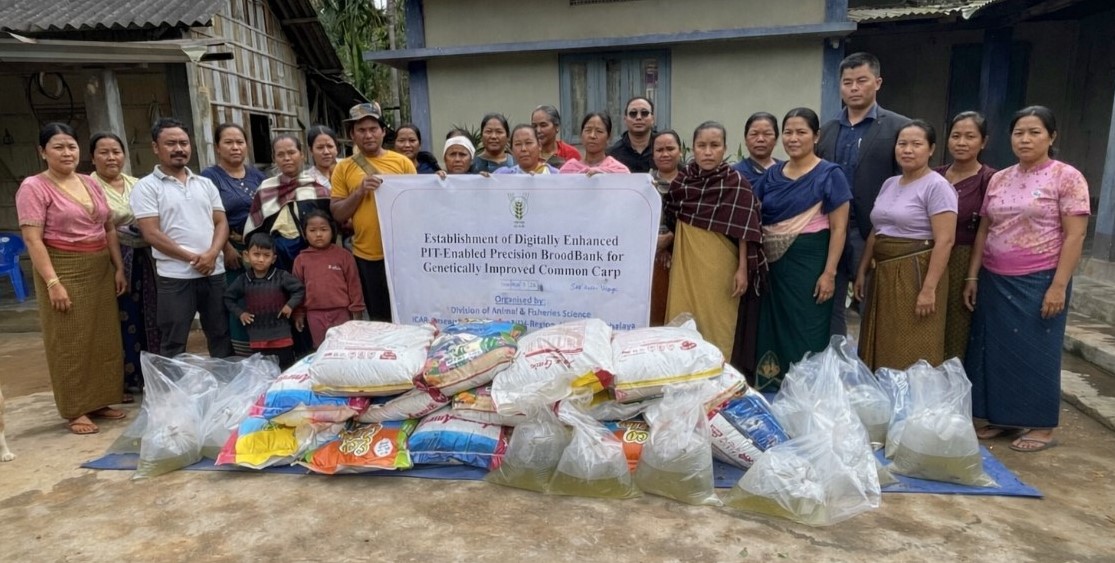
A total of 15 farmers participated in the training programme, comprising 5 male and 10 female beneficiaries. As part of the programme,
approximately 500 fish fingerlings were distributed to each farmer along with 35 kg of 2 mm fish feed to support initial culture practices. Farmers actively participated in discussions
and showed keen interest in adopting improved technologies for sustainable fish farming. The programme successfully emphasized the benefits of scientific broodstock management and its
role in improving productivity and genetic quality. They also requested for more such training programmes in the future, with greater emphasis on hands-on training, particularly in induced
breeding techniques.
 |
 |